The Future of the Blue Team: Will There Be a SOC in 2036?
This chapter looks ahead, with the series' discipline, at a question every security leader is now asked: will there be a security operations centre (SOC) in 2036, and if so, what will the people in it do? It concerns all five blue team functions, B1 Anticipate, B2 Detect, B3 Investigate, B4 Respond and B5 Learn, because the future of the team is the future of each function and of who performs it. The chapter treats the outlook as a horizon register in which every trend is labelled observable, expected or speculation, stages the debate between concern and calm, and then does what only this chapter and Chapter 28 may do: it states the author's own projection, labelled as such, with the evidence that would change it.
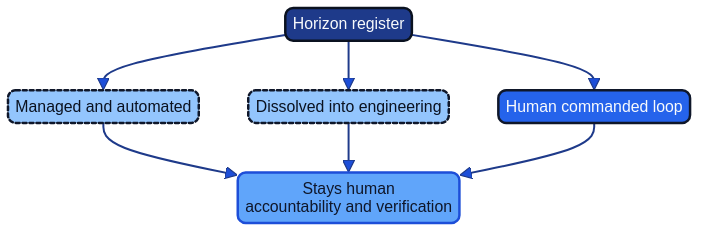
Figure 24.1: A horizon register with three scenarios for the blue team in 2036.
The chapter builds on the horizon-register method of AI Governance, Chapter 22 (62, Nordqvist, 2026), and on the argument of AI Threat, Chapter 35, that any answer should keep decisions correctable, the stop outside the system stopped, people able to judge the output, dependence reversible and autonomy matched to reversibility (65, Nordqvist, 2026). Chapters 1 to 23 supply the evidence for the present; this is the only place before the conclusion where it is extrapolated.
A horizon register
A forecast of the SOC in 2036 is unreliable by construction. The useful question is which decisions made now stay sensible across the futures the evidence leaves open. A horizon register lists trends, labels each by the strength of its evidence, attaches a measurable trigger and states the posture the team takes meanwhile.
- Observable: happening now and documented. The posture is commitment: the team builds for it today.
- Expected: supported by a stated trend or a decided instrument. The posture is preparation: the team builds the option and the skills but does not yet depend on the outcome.
- Speculation: plausible, and not supported by present evidence. The posture is reversibility: the team avoids any decision that would be expensive to undo.
Applied to the blue team, the register separates five claims that public discussion tends to merge, and labels each by the evidence this book can cite.
- AI tools are entering security operations. Observable: in the ISC2 survey of 2025, 28 per cent of respondents had integrated AI tools into operations and 69 per cent were engaged in adoption activities (Chapter 21) (73, ISC2, 2025). That routine triage will be largely automated within most organisations' planning horizon is expected (author's judgement), resting on that adoption trend.
- Detection and response work is becoming engineering-centred. Observable as a practice: open formats for detection rules exist and are used (27, SigmaHQ, n.d.). That the work as a whole becomes engineering-centred is expected (author's judgement).
- Adversaries use AI to compress the time available to defend. The UK National Cyber Security Centre (NCSC) assessed in 2025 that AI will almost certainly make elements of intrusion operations more effective, increase the frequency and intensity of cyber threats and reduce the time between disclosure and exploitation, which it says has already shrunk to days (32, NCSC, 2025). That is a forecast by a named authority with a stated horizon, so it is expected, attributed to the NCSC. Google's threat intelligence group has published trackers whose titles report adversary use of AI (42, Google GTIG, 2026) (43, Google GTIG, 2026) (45, Blum et al., 2026); this chapter draws no figure from them, and Chapter 3 weighs the evidence.
- A managed, mostly automated detection service replaces the in-house SOC. For small organisations that cannot staff a SOC, buying detection as a service is expected (author's judgement); in ISC2's survey 33 per cent of respondents said their organisation lacked the resources to staff teams adequately (73, ISC2, 2025). For most organisations it is speculation.
- A SOC with no human accountable for containment. Speculation. The series' rule on irreversible actions argues against it. Law leaves more room than the rule does, as the section on what stays human explains.
The fictional organisations' own records support their registers' labels inside the fiction, as a real team's records would. They show the mechanism and never the prevalence, and the registers say so in their scope field.
Practical guide: Writing a horizon register for your team
Purpose. Produce, in two working sessions and under 60 lines of YAML, a register that tells the team which bets to place, which to hedge and when to look again.
Roles. The SOC lead owns the register and the CISO sponsors it. The detection engineer, the threat-intelligence analyst, the incident commander and the agent operator bring evidence for their functions. Where the register touches the shape of the team, the employee representatives are consulted before it is circulated, because a register that discusses roles is about people.
Steps.
- List at most eight trends. Include at least one from each of the three labels, and at least one that would be bad news for the team's current plan.
- For each trend, write one sentence in the form "X is happening" or "X will happen", and state which function or functions it concerns, by the names B1 to B5.
- Label it. If observable, name the document or measurement. If expected, name the source and the horizon, or the decided instrument. If speculation, say what would turn it into an expectation.
- Attach one trigger that can be measured from the team's own records or from a named external source. "Seeded-error catch below 0.80 in two consecutive quarters" is a trigger; "the market changes" is not.
- State the posture: commit for observable, prepare for expected, keep reversible for speculation. Link it to the decision record that carries it.
- Name an owner for each trend, a role and not a person, so that the register survives a reorganisation.
- Set the review date at twelve months and review earlier on any trigger. Record what changed at each review, including trends that were wrong. A register that is never wrong is not being tested.
Defaults. Eight trends, a yearly review in the budget month and a trigger review each quarter beside the oversight-quality report of Chapter 14; adapt to the planning cycle and the works agreement.
Definition of done. The register is in version control, every trend has a label, a trigger, an owner and a posture, the decision record that adopts it names its reviewers, and the next review date is in the calendar of the people who own it.
Worked example: Horizon register HZN-HM-BT-01 (illustrative)
The register below is Hansa Mutual's first, adopted under AIDR-0782. It is illustrative, and its triggers use the identifiers and thresholds of Chapters 7, 9, 13 and 14.
register: HZN-HM-BT-01
decision: AIDR-0782
owner: ROLE-HM-SOC-01
scope: Hansa's own records; shows the mechanism, not the industry
reviewed: 2027-11-22
next_review: 2028-11-21
trends:
  - id: HM-T1
    label: observable
    statement: Routine triage is automated; people verify a sample (B3)
    evidence: HM-SEC-006 closes SC-01 and SC-02; PIR and OQM records
    trigger: closure classes at Level 3 rise above 4 without PIR support
    posture: commit
  - id: HM-T2
    label: observable
    statement: Detection work is engineering on versioned records (B2, B5)
    evidence: 48 drafts, 15 merged in 2027-Q1; DET-HM records
    trigger: merged-to-drafted ratio below 0.2 for two quarters
    posture: commit
  - id: HM-T3
    label: expected
    statement: Adversary AI shortens the time to exploit (B1, B2, B4)
    evidence: NCSC 2025 assessment, horizon 2027
    trigger: median time to contain exceeds the exploit window in HNT records
    posture: prepare
  - id: HM-T4
    label: expected
    statement: More reversible response classes move to Level 3 (B4)
    evidence: NCSC 2025 trend; PBK-HM-ISOLATE-01 record; PIR-HM-0455 findings
    trigger: seeded catch below 0.80 in two quarters stops any move
    posture: prepare
  - id: HM-T5
    label: expected
    statement: Entry-level triage posts shrink; the route to seniors thins (B3)
    evidence: AIDR-0775 conversion of four tier 1 posts; Chapter 23 programme
    trigger: no promotion from tier 1 to investigation lead in 24 months
    posture: prepare
  - id: HM-T6
    label: observable
    statement: Management bodies carry cyber duties in force (DORA Art 5) (B4)
    evidence: instruments in force
    trigger: amendment or supervisory statement on machine accountability
    posture: commit
  - id: HM-T7
    label: speculation
    statement: A managed service replaces the in-house SOC outside the core
    evidence: none in group; provider marketing only
    trigger: provider offers stated autonomy, notice and liability terms
    posture: keep reversible
  - id: HM-T8
    label: speculation
    statement: Cross-function autonomy without a named human incident commander
    evidence: none; contradicts the Level 4 rule for irreversible B4 actions
    trigger: supervisor accepts machine-held accountability in writing
    posture: keep reversible
Three scenarios
The scenarios say what the SOC could look like if the trends combine in different ways. They are devices for thinking and not forecasts, and none carries a probability. Each label names the trend or instrument it rests on.
Scenario A: managed and automated. Detection and first response are bought as a service from a provider whose AI closes, enriches and contains at a pace no in-house team matches. The organisation keeps a small group that sets requirements, receives escalations and answers to the supervisor. Its strongest argument is scarcity: ISC2's respondents report a lack of resources to staff teams (73, ISC2, 2025). Its weak point is the Mode 0 blind spot of AI Red Team, Chapter 8: autonomy that nobody decided and that the customer cannot sample, stop or reconstruct (64, Nordqvist, 2026). Scenario A survives only with a contract that states autonomy, sampling and notice of change (Chapter 16). Label: expected (author's judgement) for small organisations, on the ISC2 resource figures; speculation for a fully managed service that also carries accountability.
Scenario B: dissolved into engineering and platform teams. The SOC as a room of analysts watching queues disappears. Detection is written by engineers in the teams that run the systems, using a shared platform; triage is machine work; response is a playbook; incident command is a rota in the platform organisation. This follows the pattern Architecture as Code (Chapter 17) describes for platform teams as internal service providers (61, Nordqvist, 2025). Its strength is that detections, playbooks and mandates are code and belong where code is owned. Its weak point is that dissolution scatters the cross-system view, the memory of past incidents and the craft, and neither a product team nor a platform team is staffed to hunt. Label: observable for open detection-rule formats (27, SigmaHQ, n.d.); speculation for the end of the central team.
Scenario C: the human-commanded loop. A smaller central team conducts a set of agents under mandates, owns the detection and playbook repositories, hunts, and holds the incident-command role. This is the shape that Chapters 4, 13 and 18 describe. Its strongest argument is that it satisfies the series' commitments and keeps a named person where the law places duties on the management body. Its weak point is that it depends on three things the team must keep: the skill to verify, the route by which new analysts are made, and an organisation willing to pay for a team whose output is the absence of loss. Label: expected, resting on the decided duties of management bodies under NIS 2 Article 20 and DORA Article 5 (3, European Union, 2022) (2, European Union, 2022); its long-run stability is speculation.
| Scenario | Who performs B1 and B2 | Who performs B3 | Who performs B4 | Who performs B5 |
|---|---|---|---|---|
| A. Managed and automated | Provider, to the customer's requirements | Provider's AI and staff; customer verifies escalations | Provider executes playbooks; customer's incident commander for irreversible actions | Customer reviews the provider's record |
| B. Dissolved into engineering | Product and platform engineers on shared tooling | Machines for routine work; on-call engineers for cases | Playbooks; platform on-call; named incident commander | Engineering teams' reviews |
| C. Human-commanded loop | Intelligence and detection engineers conducting agents | Agents triage; senior analysts verify and investigate | Playbooks at Level 3 for reversible classes; incident commander | The team, with the purple loop |
The table names an incident commander in scenarios B and C by design: the series' rule puts the person there, and the scenarios do not show that law forces the result.
What stays human
Across the three scenarios, four things need to stay with people. These are the book's conclusions, drawn from the obligations and from Parts II and III, and they are design recommendations as much as predictions.
Accountability for containment that cannot be undone. The series' rule is that Level 4 Autonomous is never used for an irreversible B4 Respond action, and that a stop path sits outside the system it stops. European law bears on the question without settling it. NIS 2 Article 20 makes the management body responsible for approving and overseeing cybersecurity risk-management measures (3, European Union, 2022), and DORA Article 5 does the same for ICT risk in the financial sector (2, European Union, 2022); DORA is the primary regime for Hansa's EU financial entities, and NIS 2 applies to Nordvik as nationally transposed. Neither requires a named in-house human incident commander, and both leave room for outsourcing, with the entity remaining responsible. The duty stays with the management body; the series' rule is the reason for a named human decider; and the law leaves room for scenarios in which the provider executes. This is an architectural implication, not legal advice.
Judgement under uncertainty. The cases that remain after triage are those where the defined classes do not fit: a sequence that matches no pattern, a host that is both a patient-record server and a candidate for isolation, an indicator the adversary may have written. Chapters 8 and 14 argue that these need an independent check.
Verification. The ability to check what an AI concludes, without starting from its answer, is the skill on which every delegation depends. Bainbridge's Ironies of Automation made the point for industrial processes (75, Bainbridge, 1983), and Parasuraman and Manzey document that reliance on automated aids can reduce checking (76, Parasuraman & Manzey, 2010). Verification decays without practice, so any scenario that reduces practice reduces the capacity to verify. That is a conclusion of the book, not a measurement.
The stop and the exit. Whoever runs the SOC in 2036 needs to turn off an agent, a provider's automation or a playbook class faster than it can do harm, and to continue without it (Chapter 13 and the exit plan of Chapter 16). The need grows with the autonomy delegated.
The effect of adversaries
The NCSC judges that AI will almost certainly increase the frequency and intensity of cyber threats, that the time between disclosure and exploitation will shrink further, and that there will almost certainly be a digital divide between systems keeping pace with AI-enabled threats and those that do not (32, NCSC, 2025). It also says AI will aid system owners and software developers in securing systems, and judges a remote chance of universal access to AI for cyber defence by 2027. These are expected, attributed to the NCSC, with its horizon of 2027.
The consequences are the book's own inferences from that forecast. For B1 Anticipate and B2 Detect, the response in every scenario is to maintain detections as code, test them against emulated behaviour by ATT&CK technique and not by indicator, and move intelligence into the detection pipeline in hours. For B3 Investigate, everything an AI reads in an investigation may have been written by the adversary, which is the architectural point of AI Red Team (64, Nordqvist, 2026), so the containment of Chapter 15 and the verification of Chapter 14 matter more as adversaries learn what the defender's AI reads. For B4 Respond, a shrinking window raises the share of response that must be pre-authorised. That is the book's inference, not the NCSC's: it argues for moving more reversible response classes to Level 3 Bounded, with the human work moving to writing, testing and owning the playbook, and it does not move irreversible actions to Level 4.
What is speculation is the adversary that closes the loop entirely, an autonomous campaign that adapts faster than any human can follow. The posture is reversibility: do not build a defence that works only if the endpoint never arrives, and do not build one that cannot be extended if it does.
The debate
Each position is stated as its holders would state it. Neither side can cite a study of the SOC in 2036; both rely on the surveys and assessments cited here.
The case for concern
Those who hold this position argue that the SOC as a human function is in decline and that the decline will be quicker than the profession expects. Their argument has four parts.
First, the work that justified the headcount is the work that machines do best. Alert triage is high-volume, repetitive and rule-governed, and the research on SOC analysts concerns precisely this load: the qualitative study of analysts' perspectives on alarms reports that validating alarms is tedious and can lead to burnout (69, Alahmadi et al., 2022), and a human capital model addresses analyst burnout (70, Sundaramurthy et al., 2015). If triage is automated, the argument runs, the tier 1 posts go, and with them the staffing model and the budget line.
Second, adoption is under way. Twenty-eight per cent of ISC2's respondents had integrated AI tools into operations and 69 per cent were engaged in adoption activity (73, ISC2, 2025), and the same survey reports respondents short of resources to staff their teams.
Third, the economics, as an argument, favour concentration. A provider that runs one detection platform for many customers can amortise the engineering, the intelligence and the model cost in a way a single organisation cannot. If the provider's closure quality is as good as sampling suggests, the customer's rational move is to buy. No source in the bibliography measures provider closure quality, so this part rests on reasoning about costs.
Fourth, the people who remain will be few, paid for judgement they rarely exercise, and exposed to the ironies Bainbridge described (75, Bainbridge, 1983). The result is a thin layer of experts with little practice, and organisations that discover too late that nobody can verify the service they bought.
The case for calm
Those who hold this position argue that the SOC will change and not vanish, and they have four arguments of their own.
First, the threat grows with the technology. The NCSC judges that AI will almost certainly increase the frequency and intensity of cyber threats and shrink the time between disclosure and exploitation (32, NCSC, 2025). More and faster threats mean more alerts, more incidents and more playbooks to write and own, and the digital divide the NCSC describes falls between organisations that keep people able to use AI against threats and organisations that do not. Automation of triage answers rising volume. It does not abolish the function that sets the classes, owns the playbooks and answers for the cases that fit none. On this reading AI resembles the earlier waves of security information and event management, orchestration and managed detection, each of which changed the work and created new work in tuning, content, integration and review. That is the author's reading of the field's history; no source in the bibliography documents it.
Second, the defenders' own AI enlarges the estate to be defended. Dedicated risk lists now exist for large language model applications and for agentic applications (13, OWASP, 2025) (14, OWASP, 2025). A defender's agent reads text the adversary may have written (Chapter 15), holds credentials, and needs operators, evaluators, red teamers and a stop path. Every agent added is a system that people must secure, test and be able to turn off, so the work moves and part of it grows.
Third, concentration has a price. A provider that runs one platform for many customers is also a dependency whose failure is shared. DORA's rules on ICT third-party risk oblige financial entities to manage such dependency and to be able to exit (Chapter 16) (2, European Union, 2022), and a public authority such as Nordvik faces sovereignty and public-access limits on what alert data may leave its control (Chapter 16). An organisation that wants to buy must keep the people who can evaluate, replace or take back the service, which is a SOC under another name.
Fourth, sampling is a human skill. A provider's closures can be assessed only by sampling them against raw data, and the contractual right to sample is worth only as much as the customer's ability to use it (Chapters 14 and 16). The calm position does not deny that the economics favour buying. It says that the buyer who cannot sample is in the Mode 0 blind spot and that the cost of the people who can read the raw data is the price of the service being safe to buy.
Where the positions meet
Both positions accept the following, and these are the facts on which the register commits.
- Routine triage will be largely automated within the planning horizon of most organisations. This is expected (author's judgement); the disagreement is about what follows.
- The accountability for irreversible containment, and the ability to verify and to stop, remain with named people. The concerned position doubts that organisations will keep the people able to do it; the calm position assumes they will. Both agree it is a thing to be kept, not a thing that keeps itself.
- The route by which analysts become investigators and incident commanders is the weak point. Chapter 23 treats it, and the register records it as expected because the trigger is measurable.
- Contracts for managed detection must state autonomy, sampling and notice of change. Without them the buyer is in the Mode 0 blind spot whichever view is right.
- The evidence on outcomes is thin. The surveys measure adoption and expectation, and the studies of SOC work measure the present; neither measures what happens to detection quality when the junior layer thins.
What can be done
- Analysts: keep an unassisted share of cases and learn to write a detection, a playbook and a mandate (Chapters 14, 22 and 23).
- Detection engineers and incident commanders: write the playbook that a person will approve once and a machine will run many times, write the stop path that works without the machine, and exercise the decision rights of Chapter 18 in drills.
- SOC leads: write the horizon register and review it each year. Decide the junior route before you automate the junior work. Report the oversight-quality metric at team level and never by name.
- CISOs and boards: ask three questions each budget round. Which functions have been delegated, at which level, and who delegated them? How long would it take to run without the provider or the agents, and when was that last drilled? Who is the named person who answers for containment?
Verdict
On the question of the chapter's title, the verdict is this. That an accountable function able to verify and to stop is needed in 2036 is expected, resting on the duties of management bodies in force today. Whether that function sits in a room called a SOC is speculation, and a question about names. Whether the organisation still has the people is a question about decisions made now, and it is the part that leaders can influence.
Across the degrees of delegation
The table states, per function, the degree of delegation in the book's worked examples and the author's expectation. No entry reaches Level 4 for an irreversible action or for a decision about a named person's access to work.
| Function | Illustrative now (worked examples) | Expected (author's judgement) | Speculation |
|---|---|---|---|
| B1 Anticipate | Level 1 Assisted (drafting, collation) | Level 2 Supervised for routine hypothesis generation | Level 3 Bounded for intelligence-to-detection changes |
| B2 Detect | Level 1 Assisted (drafts under review) | Level 2 Supervised for tuning of low-risk rules | Level 3 Bounded for content changes without review |
| B3 Investigate | Level 3 Bounded for closing defined low-risk classes with sampling; Level 2 Supervised for evidence collection | Level 3 Bounded for evidence collection in further classes | Level 3 Bounded for a consequential case without a named analyst |
| B4 Respond | Level 3 Bounded for reversible actions; Level 2 Supervised for others | Level 3 Bounded for more reversible classes where seeded catch holds | Level 4 Autonomous for any irreversible action (ruled out by the series) |
| B5 Learn | Level 1 Assisted (drafting reviews) | Level 2 Supervised for tracking closure | Learning without human participation |
The first column describes the book's two organisations, which are worked examples, so it states what is built there and not what is observable in the industry. The other two columns are the author's expectation and are not recommendations to reach them. What people and organisations can influence is review capacity (B2), the unassisted share and the route to seniority (B3), the drilled stop (B4) and the rule that a finding closes only when its re-test passes (B5).
Nordvik Region and Hansa Mutual
The two organisations face the same question from different positions, and their registers differ accordingly. Nordvik Region's register, HZN-NR-BT-01, is short: six analysts, a managed provider whose AI already acts out of hours, public pay scales and long procurement cycles. Its decisions are about the contract and the few rules it owns: whether the provider's closure quality can be sampled and the terms of annex MS-2 enforced, whether the provider market consolidates so that exit becomes impossible, and whether pay scales let it keep the one or two people who can verify. Its main exposure is scenario A without its safeguards, and its register therefore carries a trend that would be bad news: the verification capacity itself is thin. The register treats AIDR-0722's requirement set, carried into annex MS-2, as the evidence for the contract trend and sets the posture to prepare, because the signed annex is expected by 2028-03-31.
Hansa Mutual's register, HZN-HM-BT-01, is wider because Hansa is closer to scenario C. It ties each trigger to a metric that already exists: the seeded-error catch, the closure classes of the triage agent and the promotion history of the pyramid. A register that touches roles is consulted on with the Konzernbetriebsrat before it is adopted.
Worked example: Horizon register HZN-NR-BT-01 (illustrative)
Nordvik Region's register is adopted under AIDR-0727. It has six trends, because a team of six cannot act on more.
register: HZN-NR-BT-01
decision: AIDR-0727
owner: ROLE-NR-SEC-01
scope: Nordvik's own records; shows the mechanism, not the industry
reviewed: 2027-11-15
next_review: 2028-11-14
trends:
  - id: NR-T1
    label: observable
    statement: The provider's AI closes alerts out of hours (B3)
    evidence: AIDR-0712 weekly sampling; CASE-NR-0231
    trigger: sampled reopen rate above 0.05 in any quarter
    posture: commit
  - id: NR-T2
    label: observable
    statement: Rules owned by the Region are fewer than rules owned by the provider (B2)
    evidence: AIDR-0701 takeover of rules one at a time; DET-NR-0001
    trigger: fewer than 12 owned detection records by 2028-06
    posture: commit
  - id: NR-T3
    label: expected
    statement: Provider consolidation raises exit cost (B2, B3, B4)
    evidence: market notices; annex MS-2 notice terms (AIDR-0722)
    trigger: notice of change or ownership under the framework agreement
    posture: prepare
  - id: NR-T4
    label: expected
    statement: Adversary AI shortens the time between exposure and use (B1, B4)
    evidence: NCSC 2025 assessment, horizon 2027
    trigger: exposure items older than 7 days with exploitation reported
    posture: prepare
  - id: NR-T5
    label: expected
    statement: Too few people can verify the provider's closures and the entry route is thin (B3, B5)
    evidence: two analysts who read raw alert data; one trainee post (AIDR-0726)
    trigger: fewer than two analysts able to sample the provider's closures
    posture: prepare
  - id: NR-T6
    label: speculation
    statement: A national or EU-level shared SOC service replaces local analysts
    evidence: none for the Region; EU instruments in force only
    trigger: a shared service offered with terms for autonomy and notice
    posture: keep reversible
The author's projection
This section is the author's judgement. It goes beyond the evidence of the preceding chapters, it is the part of the book most likely to be wrong, and it is written to be falsified. Each item carries one of the three labels, marked as the author's judgement.
My judgement is that by 2036 the SOC will survive as a name in large groups and in the public sector, and that what it contains will differ from today's in five ways.
- Expected (author's judgement): routine triage, enrichment and the first reversible containment steps will be performed by agents under mandates in most large European organisations, with people verifying samples and owning classes. The reasons are the adoption already reported by ISC2 and the resource shortage it records, and I hold this with more confidence than the rest.
- Expected (author's judgement): the central human team will be smaller and more senior than today's, organised around detection and response engineering, hunting, incident command and the conduct of agents, with the tier 1 post as a rung that exists mainly in organisations that decided to keep it.
- Expected (author's judgement): smaller organisations will buy detection and first response as a service, and the differentiator among providers will become the terms of autonomy, sampling, notice and liability, more than the model. I do not expect a fully managed service to carry the accountability that the law places on the management body.
- Expected (author's judgement): the incident commander will remain a named human role in every organisation of the size this book addresses. I regard delegation of any irreversible containment to a system without a named human decider as speculation that I would advise against, for the reasons given in Chapters 10 and 18.
- Speculation (author's judgement): the binding constraint will shift from alert volume to verification capacity, and the organisations that do well will be those that treated the making of analysts as an architectural problem, with a budget, a route and a test, before the junior work went. If I am wrong, I am more likely to be wrong in the direction of too little concern, because the erosion Bainbridge described is slow and invisible until the degraded mode is needed.
To the question of who should perform which function in 2036, my judgement is that a person should perform the accountable decision in B4 and the verification of consequential cases in B3; systems should perform the routine part of B1, B2 and B3 and the reversible part of B4; and a person conducting systems should perform most of B2 and B5. The detail belongs in Chapter 28.
What would change the view
A projection that cannot be falsified is not worth holding. Each trigger below has a threshold and belongs in your own register.
- Autonomous closure shown safer than sampled human closure. If independent reproduction on operational data at two or more sites showed an automated closure policy with a false-negative rate no higher than well-sampled human review, across at least three classes including an adversarial one, over twelve months, I would expect the human sample to shrink and scenario A to be more attractive than I have judged.
- A legal change that accepts machine-held accountability. If an amendment or a supervisory statement under NIS 2, DORA or sector rules allowed accountability for containment to be satisfied by a documented system, my view of what stays human would need rewriting. I have no sign of that today.
- Provider terms becoming the norm. If, in your own tender, at least half of the qualifying providers offered stated autonomy, liability and notice terms and records from which you could reconstruct an incident, scenario A would need fewer safeguards than I assume.
- A route to seniority without junior triage. If at least two organisations showed analysts reaching investigation-lead competence within five years of joining, by demonstration at the stage gate of Chapter 23 and without a tier 1 post, I would be less worried about the entry route.
- Adversary speed that no human step can fit. If your own records showed a median time from exposure to exploitation shorter than your playbooks' human approval time for two consecutive quarters, I would expect more reversible response to be delegated and the human work to concentrate on exposure management. I would not extend Level 4 to irreversible actions.
Summary
This chapter treated the future of the blue team as a horizon register in which every trend carries a label, a trigger, an owner and a posture. It set out three scenarios for 2036, managed and automated, dissolved into engineering, and the human-commanded loop, and argued that they differ in where the work is done and agree on what stays human: accountability for irreversible containment, judgement under uncertainty, the ability to verify and the ability to stop and to continue without the machine. The law leaves room for scenarios in which a provider executes; the series' rule on a named human decider is what puts a person in each. The NCSC's forecast, labelled expected, bears on B1 Anticipate and B2 Detect through the speed of adversary tooling, on B3 Investigate through the risk that the defender's AI reads adversary-written input, and on B4 Respond through the book's inference that more reversible actions may move to Level 3 Bounded without touching the rule on Level 4.
The debate gave each side four arguments of its own: concern rests on machine-suited tier 1 work, adoption, the economics of concentration and a thin layer of experts; calm rests on rising threat volume, the new estate of the defender's own AI, the price of concentration and the human skill that sampling needs. The positions meet on largely automated triage, on accountability, verification and the stop staying with named people, and on the entry route as the weak point. The verdict separated whether an accountable function exists (expected) from whether it is called a SOC (speculation), and the author's projection came with five thresholds that would change it.
The practical outcome is a register. Nordvik Region's HZN-NR-BT-01 and Hansa Mutual's HZN-HM-BT-01 show how a small team and a large one write it, and the guide gives the steps, defaults and definition of done. The reader's next step is to write one, to place its first review date in the diary and to share the draft with the people it describes.
Chapter 25 turns from the future to the record: it collects composite, illustrative case studies and anti-patterns from the first year of the transformed blue team. Chapter 28 gives the author's concluding judgement on the whole book.
Sources
- European Parliament and Council of the European Union. Directive (EU) 2022/2555 on measures for a high common level of cybersecurity across the Union (NIS 2 Directive). Official Journal of the European Union, 27 December 2022. (3, European Union, 2022)
- European Parliament and Council of the European Union. Regulation (EU) 2022/2554 on digital operational resilience for the financial sector (DORA). Official Journal of the European Union, 27 December 2022. (2, European Union, 2022)
- OWASP Foundation. OWASP Top 10 for Large Language Model Applications, 2025 edition. (13, OWASP, 2025)
- OWASP Foundation (2025). OWASP Top 10 for Agentic Applications for 2026. (14, OWASP, 2025)
- SigmaHQ. Sigma: Generic Signature Format for SIEM Systems. (27, SigmaHQ, n.d.)
- National Cyber Security Centre (2025). Impact of AI on cyber threat from now to 2027. NCSC Assessment, 7 May 2025. (32, NCSC, 2025)
- Google Threat Intelligence Group (2026). GTIG AI Threat Tracker: Adversaries Leverage AI for Vulnerability Exploitation, Augmented Operations, and Initial Access. Google Cloud Blog, 11 May 2026. (42, Google GTIG, 2026)
- Google Threat Intelligence Group (2026). GTIG AI Threat Tracker: From Prompting to Autonomy: The Evolution of Adversarial AI. Google Cloud Blog, 8 September 2026. (43, Google GTIG, 2026)
- Blum, Mainor, Nambiar et al. (2026). ARTEX and Friends: Enter Agentic Offensive Frameworks. Google Threat Intelligence Group and Mandiant, 30 October 2026. (45, Blum et al., 2026)
- Nordqvist, G. (2025). Architecture as Code. The Architecture as Code Series, Book 1. (61, Nordqvist, 2025)
- Nordqvist, G. (2026). AI Governance: Governing Artificial Intelligence in European Enterprises and Public Authorities. The Architecture as Code Series, Book 2. (62, Nordqvist, 2026)
- Nordqvist, G. (2026). AI Red Team: AI as an Active Part of Cyber Defence in European Enterprises and Public Authorities. The Architecture as Code Series, Book 4. (64, Nordqvist, 2026)
- Nordqvist, G. (2026). AI Threat: Are the Dystopias Coming True? Evidence, Risk and Response for European Enterprises and Public Authorities. The Architecture as Code Series, Book 5. (65, Nordqvist, 2026)
- Alahmadi, B. A., Axon, L. & Martinovic, I. (2022). 99% False Positives: A Qualitative Study of SOC Analysts' Perspectives on Security Alarms. 31st USENIX Security Symposium. (69, Alahmadi et al., 2022)
- Sundaramurthy, S. C. et al. (2015). A Human Capital Model for Mitigating Security Analyst Burnout. SOUPS 2015. (70, Sundaramurthy et al., 2015)
- ISC2 (2025). 2025 Cybersecurity Workforce Study. ISC2, 4 December 2025. (73, ISC2, 2025)
- Bainbridge, L. (1983). Ironies of Automation. Automatica 19(6). (75, Bainbridge, 1983)
- Parasuraman, R. & Manzey, D. H. (2010). Complacency and Bias in Human Use of Automation: An Attentional Integration. Human Factors 52(3). (76, Parasuraman & Manzey, 2010)